
Oskar,
a family member.

We have a groundhog living in the garden. He hibernates during the winter but comes out in the spring when it gets warmer and plants begin to sprout. I named him Oskar; no idea whether he really is a male, but that’s what he looks like to me; plus, we’ve never seen any young ones who would definitely be around in early summer.
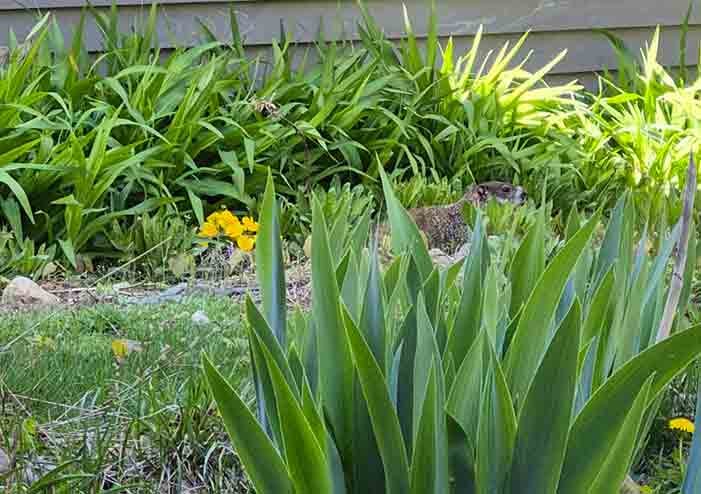
This is the first time I’ve ever seen a groundhog. When I arrived in the U.S. in 1977 I lived in the San Francisco/Bay Area for over 20 years and then moved to New Mexico. Groundhogs, or woodchucks as they’re sometimes called, live in the Eastern United States, as well as in Canada and Alaska. I wanted to learn more about them, and found them to be interesting enough to share it here.
First of all, they belong to the squirrel family, and more specifically to its largest and heaviest members: the Marmots. Yes, Oskar is quite chunky! And that after he just woke up from his long winter sleep. Groundhogs are true hibernators, a fascinating subject, so I’ll elaborate a bit. Did you know that only warmblooded animals hibernate? This includes birds, mammals, even some fish. The dormant state of coldblooded animals such as reptiles and snakes is called brumation. I had never heard this word! There’s a reason why cold-blooded animals have a special name for their dormant stage: very generally speaking, hibernating animals are in a state of deep sleep, whereas brumating ones are in a state of extremely low metabolism. They’re largely inactive but experience waking and sleeping cycles.
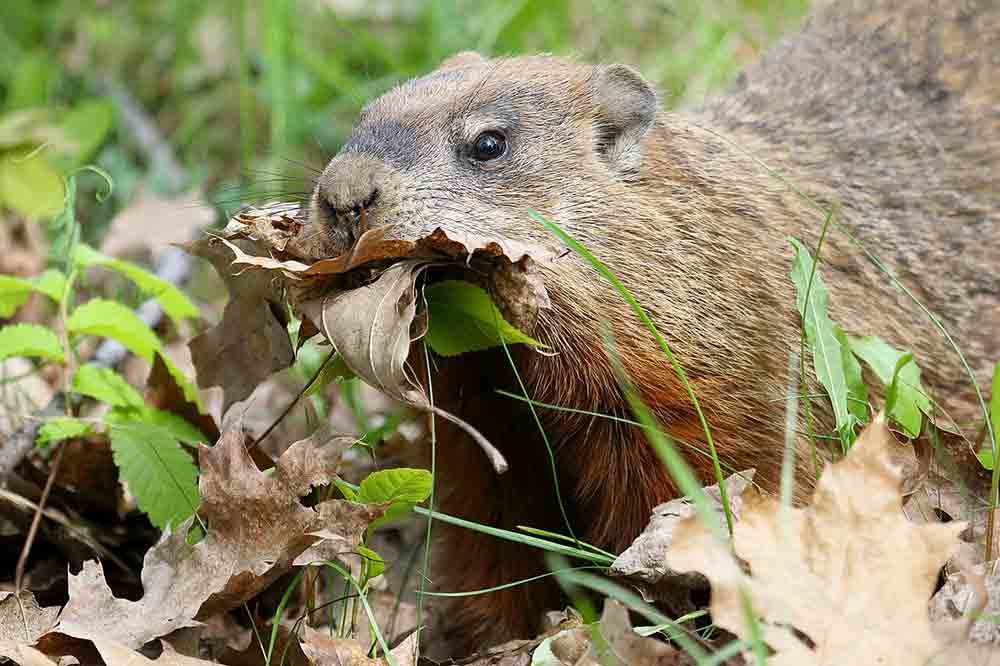
So, Oskar the woodchuck (that’s another name they have, also whistle-pig, or land beaver) is a true (obligate) hibernator, which means that he is in tune with the seasons and senses when winter is about to come. He will eat as much as he can, to accumulate fat reserves (at least 50% more than normal) which will last all throughout this deep sleep period. Every year, the duration of his sleep is almost the same. Interestingly, Oskar follows a biological clock which would drive him to sleep, even if the temperature doesn’t drop!
So, at the end of autumn, Oskar will retreat into his burrow (more about this later). And then he undergoes profound metabolic changes: his heart rate drops by almost 95% to four to ten beats per minute (normal heart rate is around 80), his body temperature can go as low as 35 degrees Fahrenheit, and he takes one breath every six minutes! This state of reduced body temperature and metabolic rate is called torpor, something I had learned about in connection to the many hummingbirds who came to visit when I lived in New Mexico. They usually arrived during the second week of April, and there could be nights when the temperature went below freezing. I worried about these tiny sweet birds, but learned that they could protect themselves: they could induce a temporary state of torpor, when their metabolism slowed way down. This allowed them to conserve energy and survive cold temperatures. These episodes last 24 hours or less. When breathing, heart rate, and metabolism slow down significantly over a period of a few months, it’s called hibernation.
Just one more quick fact: there’s also facultative hibernation, which means that an animal isn’t forced to enter a hibernative state, as Oskar is. Squirrels, for example, are facultative hibernators. They are flexible and respond to harsh weather or food shortage by hibernating, but they don’t have to. They can stay active in a warm winter, whereas Oskar cannot.
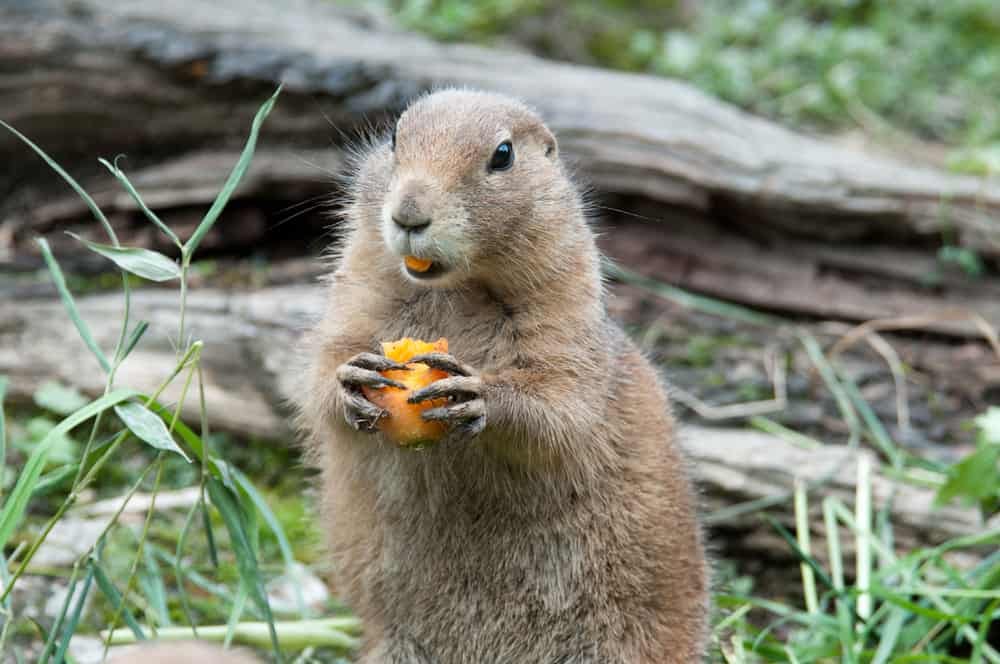
Groundhogs are known to be extremely intelligent animals, and their burrows are one example. I was reminded of hobbits! A complex burrow system has at least two, often five and even more entrances. They’re built at a depth where frost can’t reach, and the temperature never goes below 35 degrees Fahrenheit. They run at least 30 feet underground and have several different rooms or chambers, each for a special purpose. They even have a separate bathroom! Plus, sleeping quarters and a nursery room – quite fancy digs, wouldn’t you agree. To achieve such engineering feats, they have to cooperate and form elaborate social networks. They whistle in order to alert other family members of potential threats (that’s why they’re also called whistle pigs).
Another proof for their intelligence can be a nuisance for farmers and gardeners, and reminded me that marmots belong to the squirrel family after all. I constantly lose the battle of keeping squirrels away from my bird feeders, and groundhogs are equally hard to keep away from cultivated vegetable beds. They climb fences or easily dig underneath them. When I googled the critters to learn more about them, the first websites that came up were ads for groundhog killers and pest control pros. From Amazon, of course. Which reminds me to switch to Firefox at least, or install Linux, to get away from those greedy moneygrabbers. But back to Oskar!
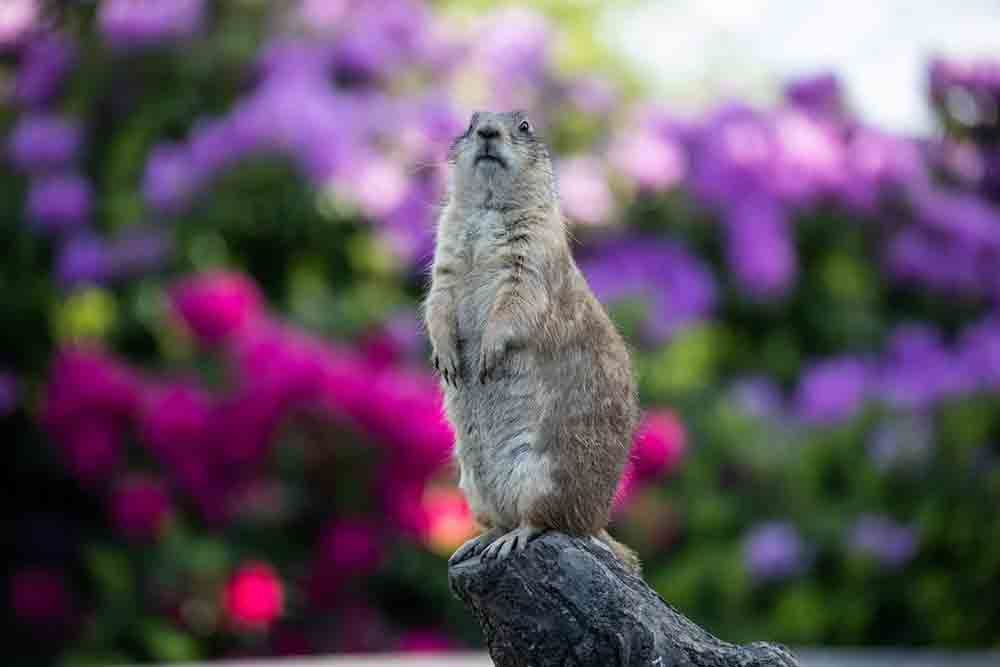
If he really is a boy which I don’t know for sure, he would find a partner right now to mate with, stay with her in the same burrow during her gestation period which is 31 or 32 days, and then go his own ways soon after. The female gives birth to several pups, usually between three and five. Mom takes care of them for about seven weeks and introduces them to the wild once their fur has fully grown and their eyes have opened. Sometimes the Dad comes back during this time, but by the end of August they all scatter to build their own burrows. This happens only once a year.
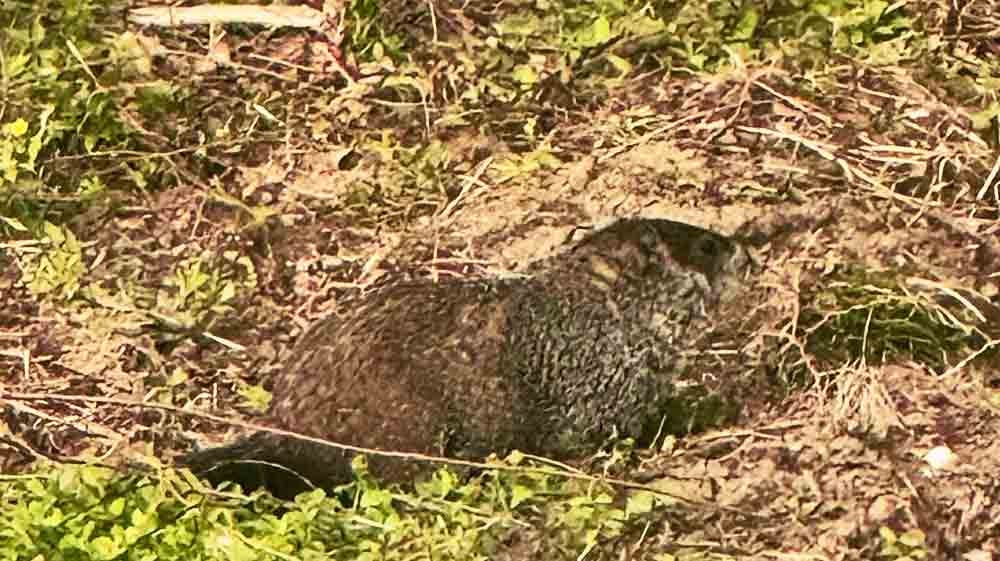
Did I mention that these creatures are herbivores? They eat a wide variety of wild plants, love clover and alfalfa, and when they can get garden vegetables, they’ll go for them. I bought some chicken wire that I’ll put around cucumber and lettuce seedlings and other such babies; last year, I planted a little soy bean shoot and Oskar took care of it right away. I hope I’ll have more luck this year.
I haven’t seen Oskar for a few days; I know he’s shy and, in general, marmots and groundhogs are rather solitary animals. And yet, I worry a bit. This is a city, after all, with lots of dangers for a little animal. On the other hand, he may be hanging out with his girlfriend until she gives birth to their babies. Either way, please wish him well – let’s hope he’s alright.
What a charming creature.
Lovely post. Hugs to my friend.💙🐾♎✌️