
Nepal
Trying to escape from an oppressive government.

That’s why I left Germany, the first time in 1970 and then in 1973 for good. Only to end up with the current regime here in the United States… I wanted to continue with my travel journal anyway, and it’s actually fun to reminisce about more exciting times, so here we go. My last report ended with Kashmir, and you can find all my travel adventures here.
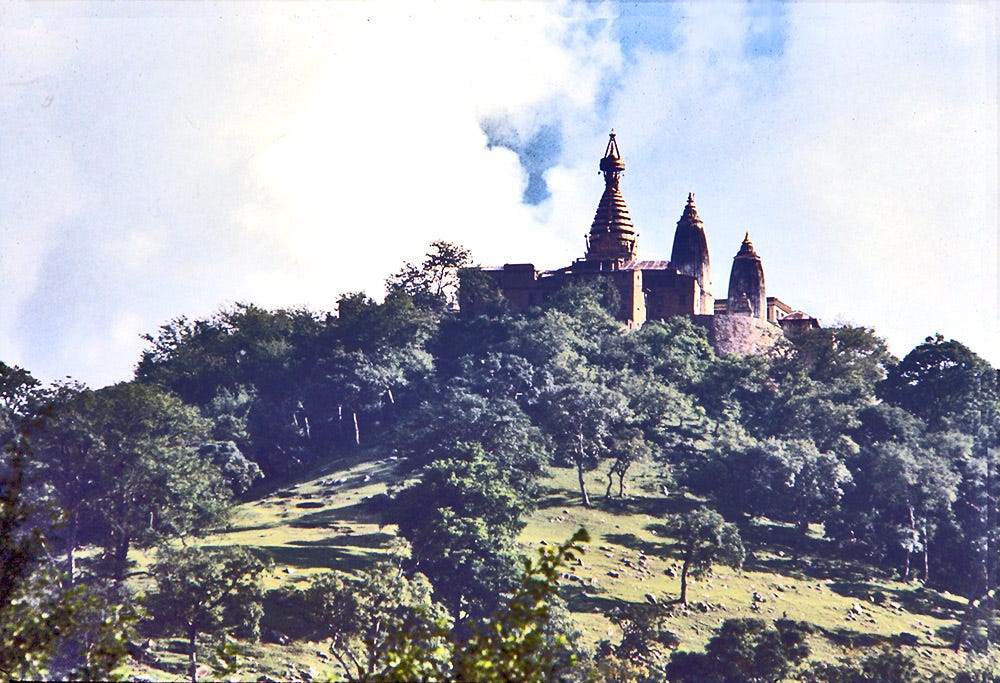
If you’ve always lived in a country without earthquakes, like I did growing up in Germany, the solid and motionless ground under your feet is fundamentally taken for granted. You never think about it. Like the air you breathe it’s something that’s just there. Sure, one reads about strong earthquakes in the news and sees disturbing pictures and videos, but nothing prepares you for the actual experience.
I was in my early twenties the first time I experienced an earthquake. Twenty years of unquestioned stability under my feet and all around me. It happened when I visited Nepal for the first time, 1969 or 1970. And I wasn’t on the ground but on the second or maybe even third floor of a cheap, rickety hotel in Kathmandu. I was sitting on my bed when suddenly everything started to sway and wobble, like jello. The walls came closer. The lamp that hung from the middle of the ceiling began to swing from side to side. All of this was so utterly impossible that the first strong reaction that I remember was disbelief. This can’t be happening. I must be dreaming, making it up. A crazy experience; the only time I can remember such a strong disconnect between my sense impressions and what I made of them.
Luckily it was a minor earthquake, and by the time I finally grasped what was going on it was already over. Welcome to Nepal!
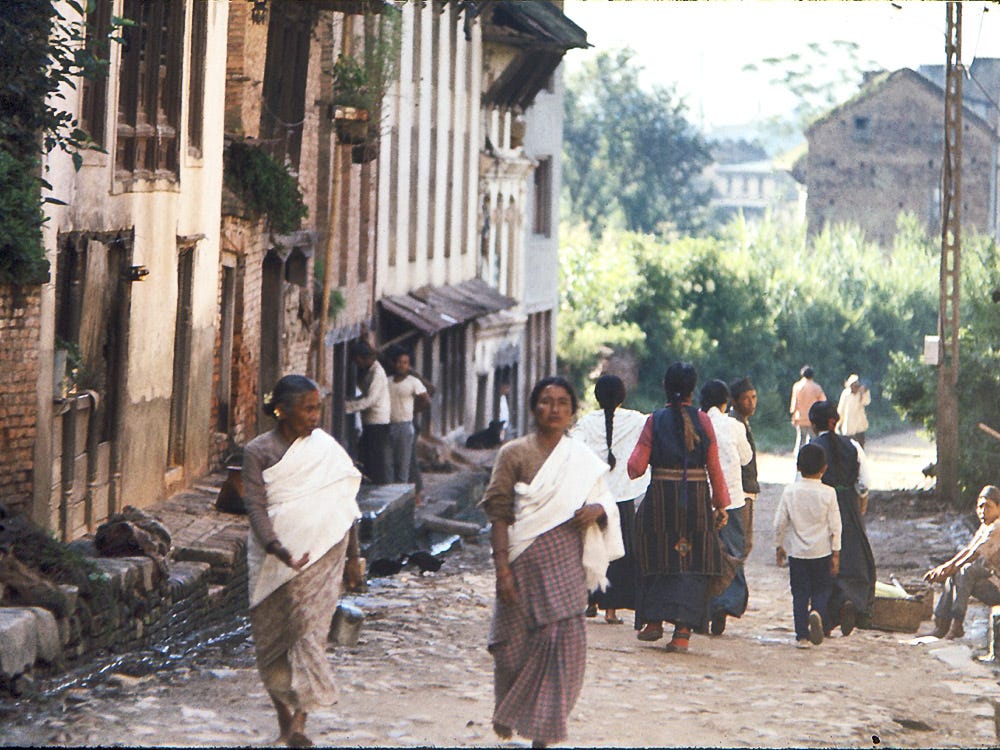
In the early 1970s most of the country lived under truly medieval conditions. Even in Kathmandu most neighborhoods had no electricity, no running water, no sewer system. Hmmm. How does one go to the bathroom when there’s no bathroom, you’ll ask. Answer: one goes behind some bushes. Seriously. Luckily at that time, there were bushes behind every house, along every street in the areas where people lived. I just did a little research, while the population in 2025 was more than 1.5 million people, in 1971 (when I spent the longest time there) it was only 147,000. Even then it wasn’t always easy to find a bush that would offer adequate protection, especially when in a hurry…
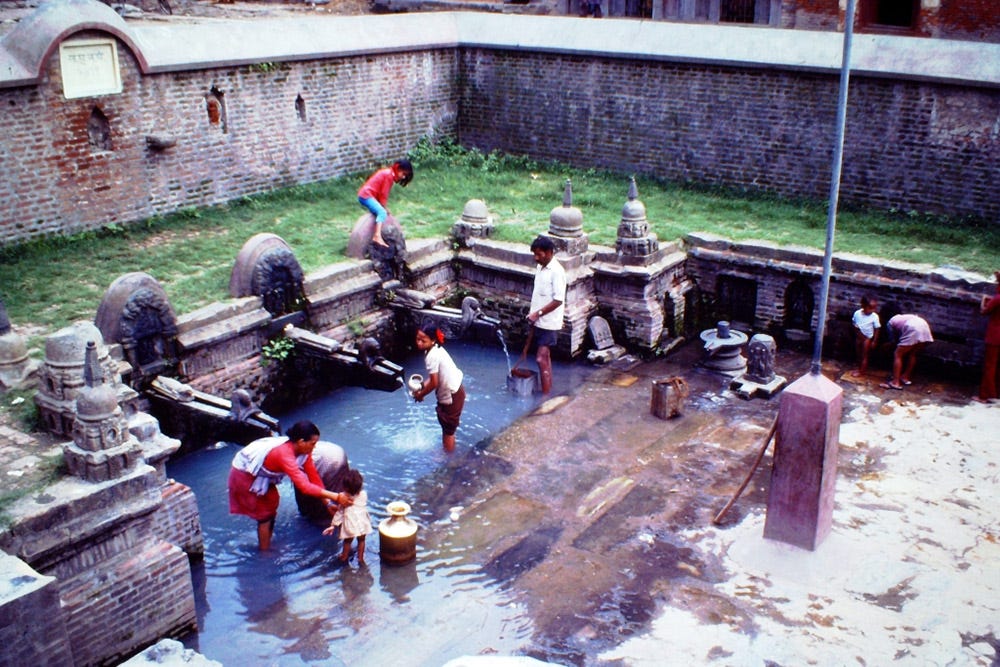
Showers, or something similar, were equally difficult. One had to go and get some buckets of water from a well. Luckily there was one on almost every street corner. Most houses were two storeys high; the ground floor was used for cattle and storage, the upper floor was one big room, the living quarters. The room at the street level often had a little shed where one could take an improvised shower with a few buckets of water. Once a week I’d go to a small river not far from the Swayambhu Stupa where I had rented a little house nearby. Usually that’s where one would meet some fellow travellers, from Europe or the United States, sometimes from Australia.
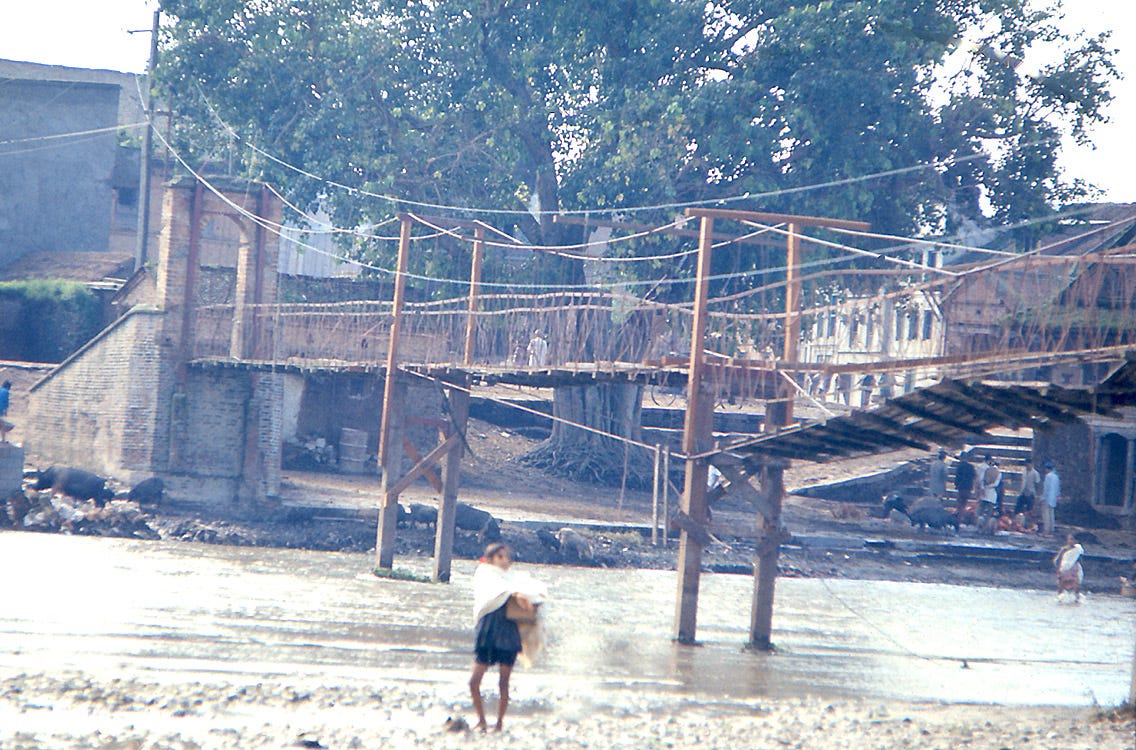
Another meeting place was the spot on the river where both Nepali women and visiting hippies would wash their laundry. This usually took all day, each clothing item had to be soaked, soaped, scrubbed – bigger things like sheets were whacked against a big rock – and then rinsed. And then spread out to dry. In between was plenty of time to chat with fellow travellers, a way to get the latest news – that the hanging bridge across the river had collapsed, for example, which meant that one couldn’t reach the downtown area by foot any more, unless one was willing to wade through the water.
Most of the hippies stayed only for a few weeks, or a few months, as I did. And then there were some who had been there for years; they enjoyed a certain notoriety and all sorts of wild stories were floating around about them. I remember one guy, an American, a regular feature and a bit of a grouch. That was in 1973, the last time I stayed in Nepal, on my way to Japan – or better, it was out of my way. I had flown from Germany to Bangkok, spent a few weeks in Laos to meet up with some old friends, and then decided to fly in the opposite direction because I felt homesick for Kathmandu. The American, rumor had it, was a G.I. who had been wounded and traumatized in Vietnam; he always walked with a stick. He’d regularly visit a doctor who would supply him with morphine. That sounded entirely plausible: prescription medications could be bought just about anywhere, and there were doctors who’d shoot people up for a small fee.
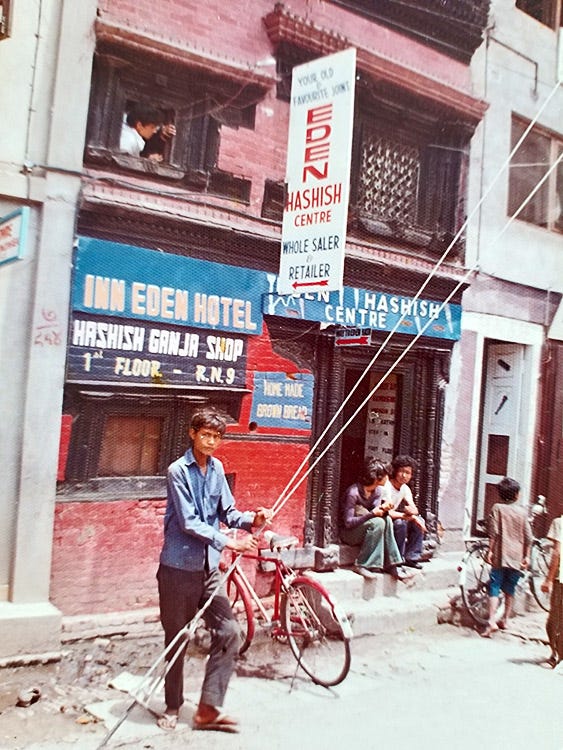
You could legally buy hashish and marijuana at government-licensed shops. Actually, you could get just about any other illicit substance as well: opium, heroin, morphine, locally procured and unadulterated. Probably even cocaine, although NOT local. An American hippie offered me some, but I declined, which is funny, come to think of it. Back in Munich I smoked hash and grass, took LSD, and swallowed all sorts of substances with dubious origin, but for some reason, cocaine sounded dangerous.
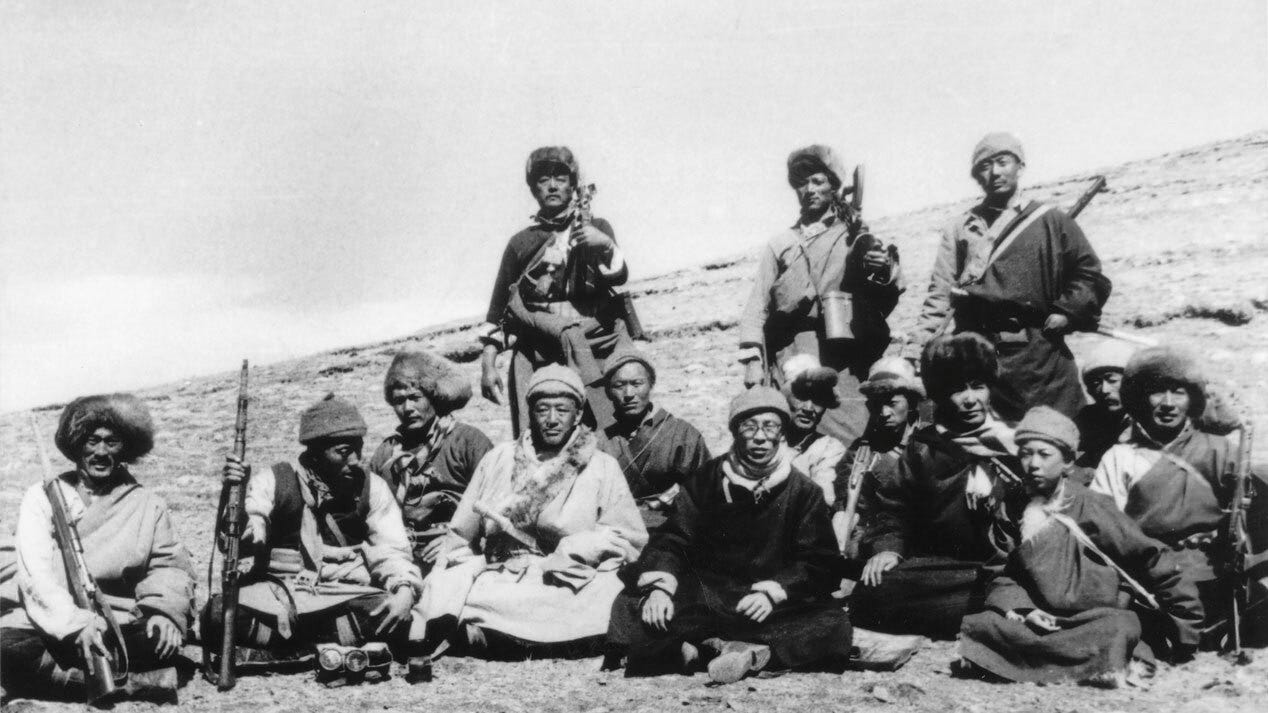
I loved the Tibetan people. They were refugees, and had to flee their country in 1959 together with the Dalai Lama, after the Chinese invaded and occupied it. Some 87,000 people lost their lives. This had happened barely ten years before I visited Kathmandu, and most of the Tibetans I met there had lost family members and friends during the violent offensive. And yet, they were kind and open, always hospitable, and quite intrepid. There were a number of restaurants run by Tibetan families, one, for example, which served Mexican cuisine! It took years before I realized that real Mexican enchiladas were entirely different from what I had eaten in Kathmandu. It doesn’t matter; I still admire the enterprising spirit.
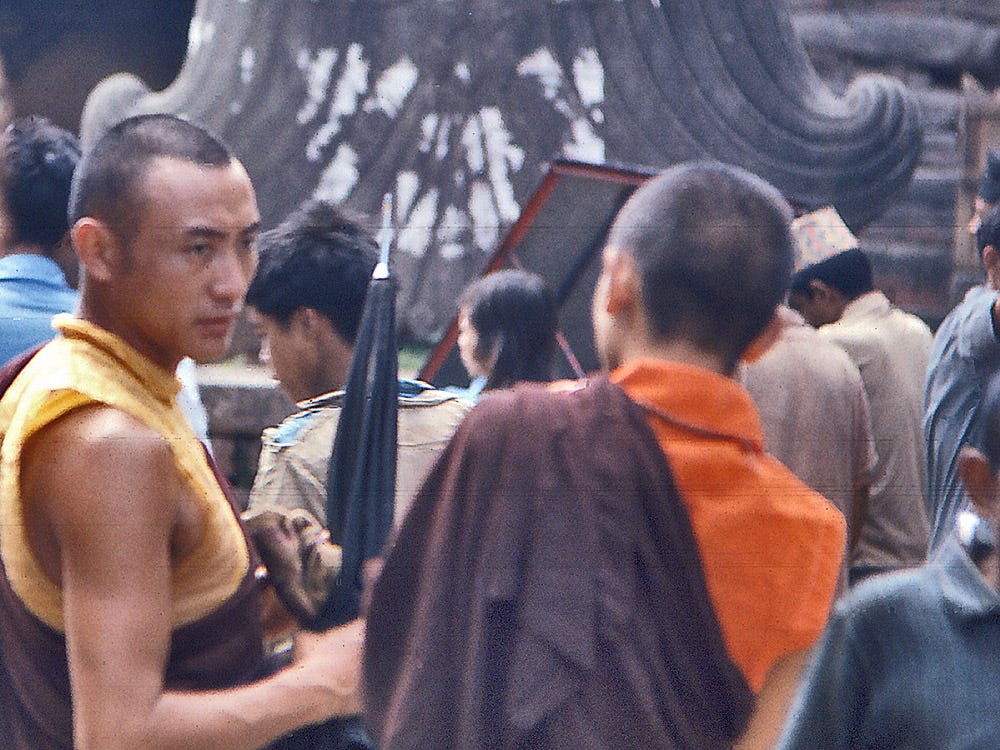
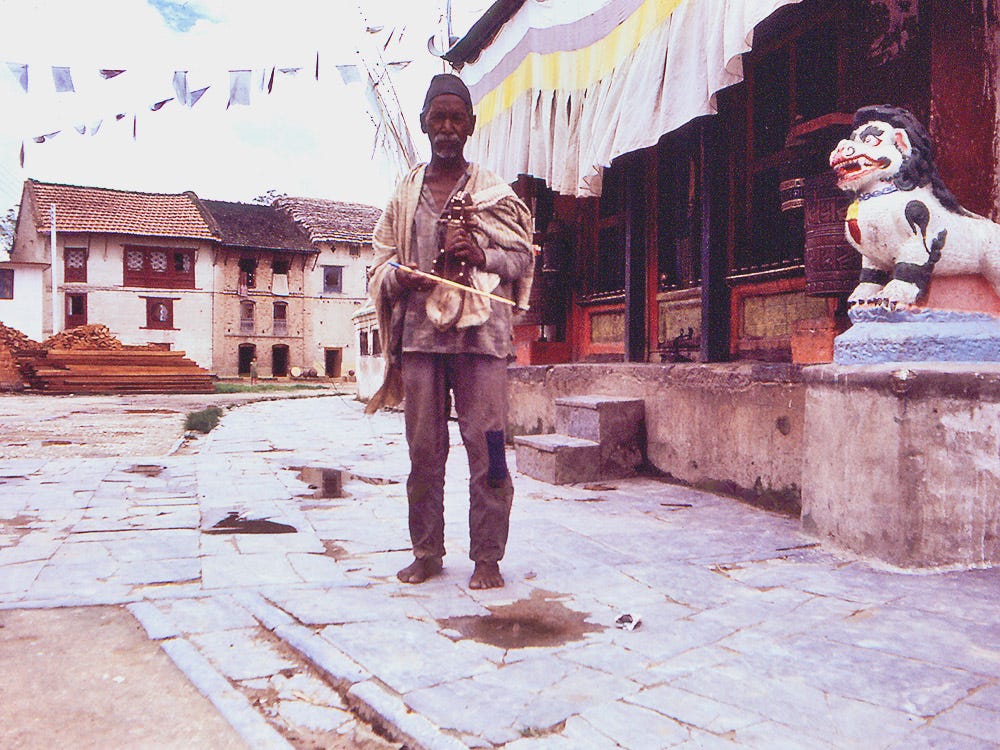
Many Tibetan refugees relocated around Boudanath, one of the two giant stupas in the Kathmandu valley and a UNESCO World Heritage Site. I rented a little house not far from it in 1971, and have fond memories of walking through rice paddies and a gorgeous bamboo forest when I wanted to visit the stupa. There was a monastery nearby, and Buddhist monks were a common sight. Almost everyone I talked to had horrible memories of Chinese atrocities. And I don’t think that much has changed there; the rights of Tibetans still living in the occupied territories are seriously abused. Over one million Tibetans have been killed after the occupation, often through “torture and starvation”.
I just read that the Dalai Lama won a Grammy for his audiobook Meditations: The Reflections of His Holiness the Dalai Lama, which he accepted “with gratitude and humility”. The Chinese government quickly reacted, calling it “anti-China political manipulation”. What’s the saying about the pot calling the kettle black? Projection much? They do all the anti-China manipulation very well themselves, as far as I’m concerned.
My apology for the quality of the images; some were slides that I scanned, others were photos that I copied using my phone. I have the negatives somewhere; they’re over 50 years old, who knows if they’d produce decent prints.